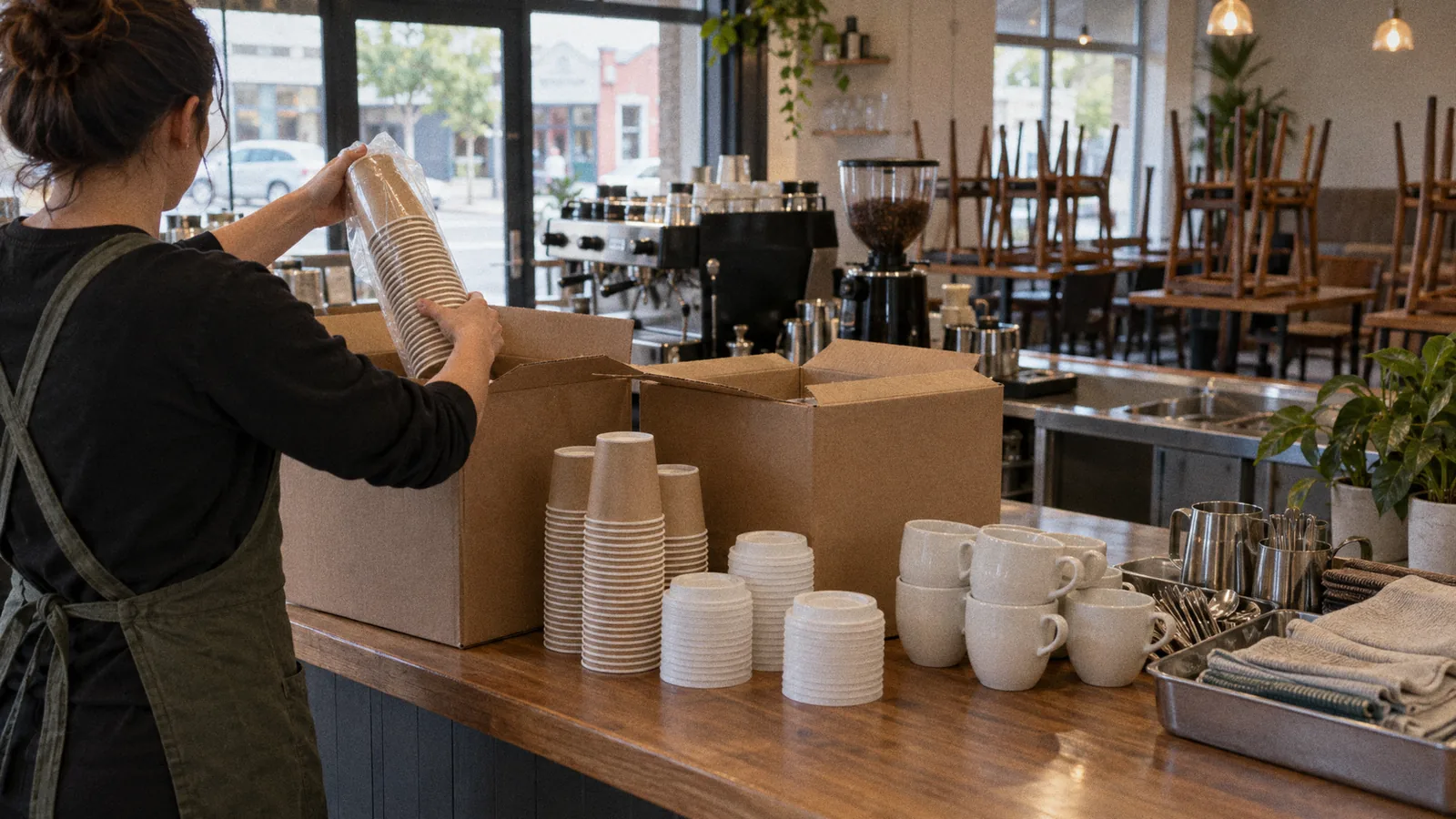
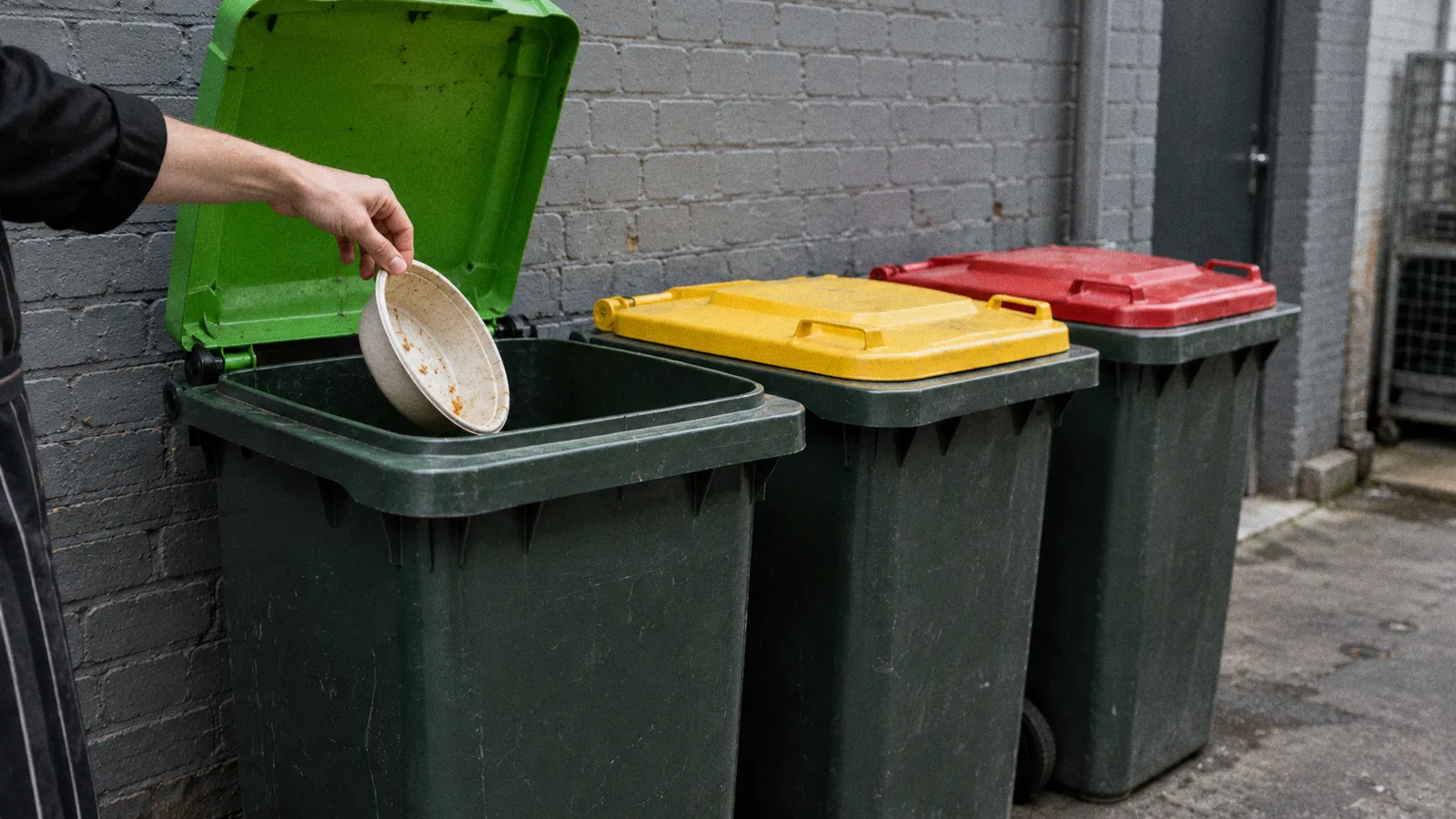
These three words appear on packaging as if they’re interchangeable. They’re not. Confusing them can send packaging to the wrong bin, contaminate a recycling stream or leave you relying on a vague environmental claim. In Victoria, the material also matters when choosing items covered by the single-use plastics ban.
Here’s what each term means and what to check before choosing packaging for your venue.
“Biodegradable” — the word that means almost nothing on its own
“Biodegradable” means a material can be broken down by biological processes. On its own, the word doesn’t tell you how long that takes, what conditions are needed or what happens when the item is discarded.
That’s why a bare “biodegradable” claim deserves a closer look. The ACCC advises businesses to make environmental claims clear, specific and supportable. An item described only as “biodegradable” gives you little help deciding which bin it belongs in. Some oxo-degradable plastics are a particular concern because they can fragment into smaller pieces rather than compost as people might expect. (ACCC)
The practical question to ask is: biodegradable where, and under what conditions? If the supplier can’t give you a clear answer and evidence for the claim, don’t rely on that word alone.
“Compostable” — the one with real standards behind it (when it’s certified)
A compostable claim should tell you which composting conditions the product is designed for. For compostable plastics in Australia, two important standards are:
- AS 4736 (2006): for commercial composting. Products verified through the Australasian Bioplastics Association (ABA) program can display its Seedling logo.
- AS 5810 (2010): for home composting. Products verified through the ABA program can display its Home Compostable logo.
ABA verification involves testing against requirements for breakdown and the quality of the resulting compost. When checking an ABA claim, look for the relevant logo and certification number, and confirm that the certification applies to the product you’re buying. (Australasian Bioplastics Association)
Certification still doesn’t tell you which bin to use. An AS 4736 product needs a suitable commercial composting pathway; it isn’t certified for a backyard compost heap. An AS 5810 product is designed for home composting. Only put compostable packaging in a FOGO bin if the council or waste contractor specifically accepts that type of packaging. General waste sent to landfill does not provide the intended composting pathway. (Australasian Bioplastics Association)
“Recyclable” — depends on the material and your local service
“Recyclable” is useful only when there is a collection and processing pathway for the item. Material, size, food residue and local services can all affect what happens to a package after you put it in a bin.
The Australasian Recycling Label (ARL) helps with this. It gives instructions for individual packaging components: Recyclable, Conditionally Recyclable or Not Recyclable. Its assessments use the Packaging Recyclability Evaluation Portal (PREP), which models how packaging performs in Australian and New Zealand recycling systems. Follow any instructions printed alongside the label, such as separating components or checking locally for a collection option. (apco.org.au)
Empty packaging before recycling it and follow its ARL instructions. Soft plastics and polystyrene generally don’t belong in ordinary kerbside recycling; check locally for any separate collection service.
The trap: compostable isn’t recyclable, and both need a pathway
A compostable claim is not an instruction to use the recycling bin. Compostable packaging placed in ordinary recycling can contaminate that stream. Equally, a recyclable container is not necessarily compostable.
For either product, the question is the same: where will it actually go after use? A certified compostable package is most useful when an appropriate composting service accepts it. A recyclable package needs a collection service that accepts that material, with any disposal instructions followed.
In Victoria, “compostable” doesn’t beat the ban
Victoria’s single-use plastics ban covers specified items made from conventional, biodegradable or compostable plastic. That means a compostable-plastic fork, straw or plate is still banned from supply. Compostability certification does not override the ban. (epa.vic.gov.au)
For those banned items, choose a genuinely plastic-free alternative suited to the product: for example, wood cutlery or paper straws. Check coatings and linings too; a paper plate lined with plastic is banned. We cover the full list in our guide to Victoria’s single-use plastics ban.
How to choose, in practice
- Check the claim. For compostable plastics, look for the relevant AS 4736 or AS 5810 certification and confirm it applies to that product. For recycling instructions, look for the ARL.
- Check the collection service. Ask your council or waste contractor whether it accepts that specific packaging. An AS 4736 logo does not automatically mean an item can go in FOGO.
- Question vague language. Ask what “biodegradable” means for that product and request evidence for the claim.
- Check Victorian rules. If you’re replacing a banned single-use item, choose a genuinely plastic-free alternative.
Byars stocks compostable and recyclable packaging options. We can help you check a product’s materials, any certification it carries and its intended disposal pathway before you order.
Frequently asked questions
What’s the difference between compostable and biodegradable?
“Biodegradable” describes biological breakdown but, on its own, says little about the timeframe or conditions. “Compostable” should describe breakdown in specified composting conditions. Certification to standards such as AS 4736 or AS 5810 provides evidence for a compostable-plastic claim.
Can I put compostable packaging in the recycling bin?
Generally, no. Follow the product’s disposal instructions instead. Commercially compostable packaging needs a suitable commercial composting service; home-compostable packaging can go in a suitable home compost. Only use FOGO for packaging your council or waste contractor confirms it accepts.
What does AS 4736 mean?
AS 4736 is an Australian standard used to assess plastics for commercial composting. ABA-verified products can carry the Seedling logo. AS 5810 applies to plastics suitable for home composting.
How do I know if packaging is really recyclable?
Look for the Australasian Recycling Label and read the instruction for each component. It tells you whether it can go in kerbside recycling, needs a condition met or should stay out of the recycling bin. Check locally where the label tells you to.
Is “biodegradable” packaging a good choice?
The word alone isn’t enough to judge it. Ask the supplier where and how it breaks down, what evidence supports the claim, and how your venue or customer should dispose of it.
Sources: Australasian Bioplastics Association certification, APCO’s Australasian Recycling Label guidance, ACCC environmental claims guidance and EPA Victoria’s single-use plastics guidance. Council and waste-contractor acceptance varies; check the service available to your venue. General information, checked September 2026.
CTA: Browse compostable & recyclable ranges · Request a quote · Call (03) 5229 9998